
Cognitive Habits for Elite School Entry: A Years 1-6 Guide
Dr Andrew Wotherspoon, Founder of Tutorio Tutoring
Elite academic results in high-stakes environments like James Ruse or the IB Diploma are the product of cognitive habits established in Years 1–6. By shifting from reactive remediation to proactive architecture, students develop the metacognitive awareness and professional nomenclature required for future STEM success and selective school entry.
Why are cognitive habits the secret to elite school results?
The journey to a top-tier ATAR or a placement in a Selective High School does not begin in Year 11; it begins when a child first learns how to think about their own thinking. This is known as metacognition. In the primary years, the brain is exceptionally plastic, making it the optimal window to install the "software" of academic success. While many families view tutoring as a way to fix a specific problem—reactive remediation—the most successful students benefit from what we call proactive architecture. This approach treats the primary years as the foundation-laying phase for complex scientific inquiry and mathematical logic.
Cognitive habits involve more than just memorizing times tables or spelling lists. They include the ability to cross-reference information, the resilience to sit with a difficult problem without immediate frustration, and the habit of self-editing. For a Year 4 student aiming for the Opportunity Class (OC) placement, these habits differentiate the high achiever from the truly elite candidate. Elite performance requires a student to maintain focus under pressure and apply logic to unfamiliar contexts—skills that are nurtured through consistent, PhD-led guidance at Primary School Tutoring . By establishing these rhythms early, students avoid the cognitive shock often experienced when transitioning to high-stakes secondary schooling.
Building these habits requires a shift in the student-teacher dynamic. At Tutorio, we move away from the traditional model of the 'all-knowing teacher' and toward a partnership where students are treated as "Junior Colleagues." This empowers them to take ownership of their learning trajectory, fostering a sense of professional responsibility toward their academic work from as early as Year 1. This psychological shift is what prepares them for the rigors of Sydney’s most competitive schools.
Proactive Architecture: Building the Junior Colleague
Proactive architecture is a pedagogical framework designed to construct the internal scaffolding a student needs to navigate complex curriculum demands independently. Instead of waiting for a student to struggle with a concept in Mathematics and English , we anticipate the cognitive leaps required for future success. This means introducing Year 5 and 6 students to the principles of logical deduction and evidence-based writing that they will eventually encounter in the HSC and IB. By demystifying these high-level concepts early, we remove the fear often associated with "difficult" subjects.
Treating a primary student as a Junior Colleague involves several key strategies:
- Encouraging the use of precise, professional nomenclature in scientific discussions.
- Fostering an environment where mistakes are viewed as data points for improvement.
- Assigning tasks that require long-term planning and self-regulation.
- Developing the ability to articulate the why behind a solution, not just the what .
- Modeling the professional standards expected in elite academic and STEM environments.
This architecture is particularly vital for students targeting schools like James Ruse Agricultural High School, where the pace of learning is accelerated. A student who has already mastered the art of structured inquiry and has a high degree of metacognitive awareness will thrive in such an environment, rather than simply surviving. We focus on building a robust academic identity that carries them through their entire schooling career. This proactive stance ensures that by the time they reach high-stakes exams, the foundational skills are so deeply ingrained they become second nature, allowing the student to focus on higher-order analysis and creative problem-solving.
How does scientific inquiry prepare primary students for the HSC and IB?
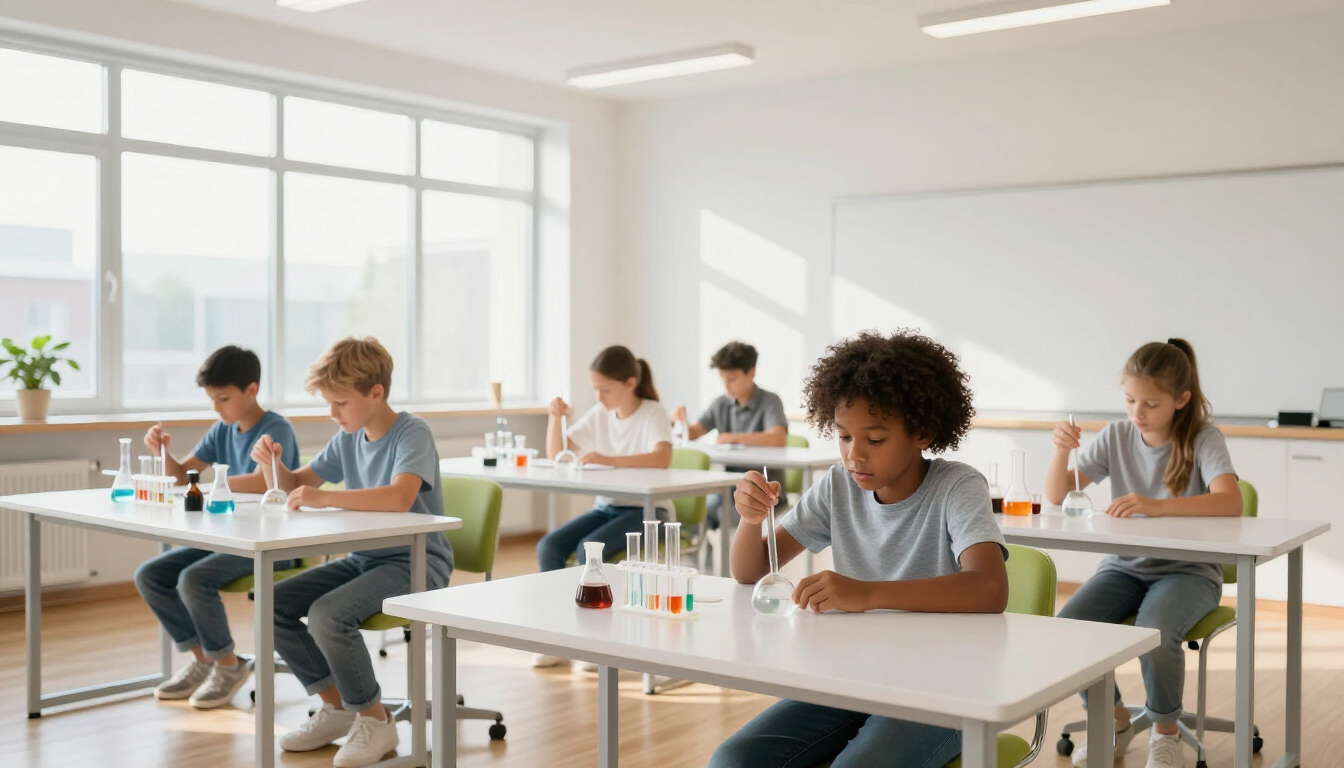
Scientific inquiry is not merely a subject; it is a way of interacting with the world. For primary students, mastering the scientific method provides a template for all logical reasoning. When a Year 3 student learns to form a hypothesis and control variables, they are practicing the same cognitive skills required for HSC Chemistry . This early exposure to the mechanics of inquiry builds a level of academic maturity that is rare in the primary years. It allows students to move beyond surface-level comprehension and toward deep, analytical thinking.
At Tutorio, directed by Dr. Andrew Wotherspoon, we integrate advanced scientific concepts into our primary curriculum. This isn't about teaching high school content early, but about teaching primary content with high school rigour. For instance, we might explore the properties of matter through the lens of molecular theory, using terminology that bridges the gap between basic observations and professional science. This builds a robust vocabulary and a conceptual framework that serves as a massive advantage during the Selective School test and beyond.
"Imagine you have magic glasses that let you see these tiny, dancing 'Lego bricks' (molecules) that make up everything. When water freezes, those dancing bricks stop moving and grab onto each other tightly. When it boils, they get so much energy they fly away like tiny rockets!"
At the primary level, we often see bright students struggle when they encounter a problem that doesn't have an immediate, obvious answer. This "fear of the blank page" is often the first major hurdle to elite academic success.
At Tutorio, we use the principles of scientific inquiry not to overwhelm your child, but to empower them. We teach them that "not knowing" isn't a failure—it's the start of an investigation.
The Third Space: Redefining the Learning Environment
The physical and digital environment in which a child learns significantly impacts their cognitive output. We utilise a "Third Space" approach—a learning environment that exists between the formality of school and the comfort of home. In our Camperdown café studio, the atmosphere is professional yet relaxed, mimicking a university research hub or a high-end design studio. This environment signals to the student that their work is serious, professional, and valued. It is a space designed specifically for deep focus and collaborative inquiry after 5 pm.
For those who join us online, we replicate this professional atmosphere using advanced technology. By utilizing Lessonspace alongside specialized hardware like the Kamvas 12 graphics tablets and Viisan VK-16 document cameras, we ensure that the digital experience is just as tactile and interactive as a face-to-face session. This technology allows for real-time annotation and visual problem-solving, which is essential for developing mathematical and scientific literacy.
Key benefits of the Third Space include:
- A dedicated physical or digital zone that triggers a 'deep work' mindset.
- Access to a primary school teacher who can offer warmth and mentorship in a non-traditional, yet still inspiring setting.
- Opportunities for students to see professional STEM tools in action virtually.
- A clear separation from the distractions of home life during study hours.
- A community of like-minded students striving for academic excellence (if they join a group lesson.
This unique approach is detailed further in our About section, where we explain how our primary school philosophy influences every aspect of the student experience and every bit as much as our later senior school experience. By intentionally designing these spaces, we provide the physical and psychological scaffolding necessary for elite performance. It is in this Third Space that the ' very Junior Colleague' truly begins to emerge, developing the professional habits that will define their future career success.
Can professional nomenclature accelerate academic maturity in Years 1-6?
Language is the vehicle of thought. When we limit a primary student’s vocabulary to simple terms, we inadvertently limit their ability to conceptualize complex ideas. By introducing professional nomenclature early, we provide students with the tools they need to articulate sophisticated observations. Instead of saying a plant "drinks water," we might discuss the process of "transpiration." This is not about being overly formal; it is about providing the correct mental labels for the phenomena they are observing. This precision in language leads to precision in thought.
Using professional language also builds a student’s academic confidence. When a Year 5 student can accurately describe a mathematical process using the correct terminology, they feel a sense of belonging within the academic community. This sense of belonging is a powerful motivator. It transforms learning from a task they must do into a profession they are a part of. This is a core tenet of our philosophy at Tutorio, where we see every primary student as a capable researcher in training. This early maturity is a significant asset during Selective School interviews and competitive entrance exams.
Summary of Elite Primary Cognitive Habits
To achieve elite results in the OC, Selective Schools, HSC, or IB, primary students must move beyond rote learning and embrace proactive cognitive habits. By establishing these foundations early, parents can ensure their children are not just keeping up, but leading their academic cohorts. The transition from a passive student to a proactive "Junior Colleague" is the most significant leap a young learner can make.
Key Takeaways:
- Metacognition in Years 1–6 is the primary driver of long-term academic success.
- Proactive architecture prevents the need for reactive remediation later in schooling.
- The "Junior Colleague" model empowers students to take professional ownership of their work.
- Early exposure to scientific inquiry and professional nomenclature builds significant academic maturity.
- The "Third Space" environment at Tutorio optimizes focus and deep learning.
If you are ready to invest in your child's academic architecture, explore our Pricing & Packages or Contact us today to discuss how Dr. Andrew Wotherspoon can support your child's journey toward James Ruse and beyond.