The private tutoring industry in Sydney has become almost unrecognisable. It is a sea of apps, platforms, and agencies that have, in many cases, forgotten there is a real student — and a real set of anxieties — on the other side of the screen.
I have been tutoring Science students for over twenty years. In that time I have watched this marketplace grow into something driven more by scale and margin than by educational outcomes. I want to be direct with you about what I think matters — and what you should be cautious about.
I hold a PhD in Biochemistry, an MSc in Analytical Chemistry awarded with Distinction, and twenty years of applied experience across university research, industry, and government. I am currently completing a Master of Teaching (Secondary) at Australian Catholic University, where I hold both a Commonwealth Government Teaching Grant and an All Points to Teaching Scholarship — a dual distinction that is, frankly, rare. I am not saying this to impress you. I am saying it because when you are choosing someone to sit with your child in the months before the most important exams of their life, you deserve to know exactly who is in that room — and why their credentials matter.
So here is what I believe you should be looking for.
1. Does the tutor actually understand how HSC Science is examined?
This is the question most parents never think to ask, and it is probably the most important one.
There is a significant difference between knowing Chemistry and knowing how NESA assesses Chemistry. A university lecturer may know the content deeply but have never studied a HSC marking guideline in their life. A recent graduate may have done well in Year 12 but lack the framework to explain why they got those marks — let alone transfer that understanding to another student.
What you want is a tutor who has studied the marking rubrics, who understands how extended responses are assessed, and who can teach your child not just the content but the language of Scientific reasoning that examiners reward.
At Tutorio, every session for Science students is built around our CORE™ Method — a framework I developed specifically for HSC, VCE, and IB Science, based on close study of how NESA, VCAA, and the IB Organisation actually mark student work. It is not a generic academic framework borrowed from somewhere else. It exists because generic frameworks do not work for Science examinations.
2. Who is actually teaching your child?
This is the question the big tutoring platforms do not want you to ask too directly.
Many of the large national and online tutoring agencies operate as marketplaces. They take your booking, charge their fee, and assign a tutor from a pool — one whose qualifications and teaching approach you may have little visibility over. The tutor who turns up to your first session may not be the same one who appears at your third.
I started Tutorio because I believed there was a better way. When I began recruiting additional tutors, I made a deliberate decision: I would only bring on people whose qualifications and values I could vouch for personally.
Our team includes qualified teachers with decades of classroom experience, and a select group of high-ATAR graduates from Sydney's most academically competitive schools — people like Hugo, who graduated from Sydney Grammar with an ATAR of 99.60 and is now a Dalyell Scholar at the University of Sydney; and Ollie, who achieved an ATAR of 99.55 across a full Band 6 suite of subjects and is now studying Mechatronic Engineering and Commerce at USYD. Every tutor on our team is interviewed, subject-tested, and mentored by me directly. Every one of them holds a current Working With Children clearance.
We are a smaller team by choice. A smaller, better team consistently outperforms a larger, inconsistent one.
3. Is the business model aligned with your interests — or someone else's?
This is something almost nobody talks about, and I think it matters enormously.
Tutorio operates with a net profit margin of approximately 15% — sometimes lower. That is not a model built for rapid growth or investor returns. It is built around one principle: fair compensation for exceptional educators.
We pay our tutors well. In fact, we pay them what I believe exceptional educators deserve to be paid. The consequence is that we cannot afford to be careless about who we recruit. Every tutor we bring on represents a real cost, which means every tutor we bring on has to genuinely earn their place.
We process invoices after sessions, never before. There are no upfront costs. You will never receive an invoice until your child has sat in a session and benefited from it. That is not a marketing line — it is how we have always operated, and it reflects a basic conviction: you should not pay for something before you know whether it is any good.
4. Does the tutor know the specific curriculum your child is studying?
This sounds obvious, but it is regularly overlooked.
The HSC, VCE, and IB are meaningfully different examinations. They have different command terms, different assessment structures, different marking philosophies. A tutor who is strong in HSC Chemistry but unfamiliar with IB Chemistry HL will not serve an IB student well — and vice versa.
At Tutorio, our tutors are matched to students based on specific curriculum expertise, not general subject knowledge. I hold IB Science specialist credentials across Chemistry, Biology, and Physics at HL and SL level. Our team collectively covers HSC, VCE, IB, and primary curriculum with genuine depth.
5. Is there genuine continuity?
One of the most underrated factors in effective tutoring is consistency. A student who sees the same tutor every week — someone who knows their strengths, understands their gaps, and tracks their progress over time — is in a fundamentally different position to a student who sees a different face each fortnight.
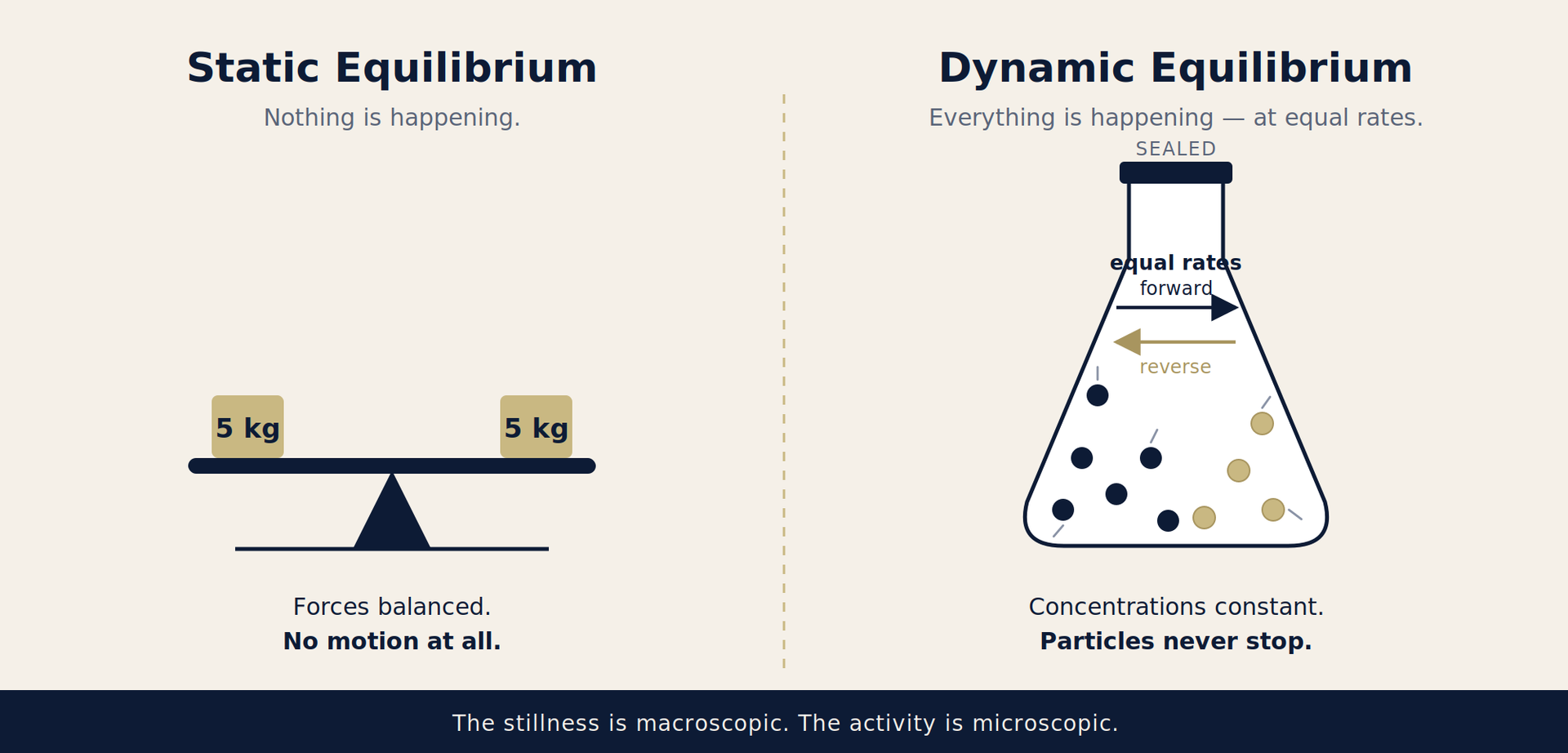
Continuity matters for Science in particular. The modules build on each other. A student who struggled with equilibrium in Module 5 will carry that gap into acid-base chemistry unless someone who knows their history catches it early. That kind of targeted, longitudinal support is only possible when there is a real ongoing relationship between student and tutor.
We prioritise continuity. When we match a student with a tutor, we intend that relationship to last the duration of their course.
6. Does the tutor use evidence-based learning science?
This is a question very few tutors will be able to answer confidently — and that tells you something important.
The cognitive science of learning is well established. Active Recall — retrieving information from memory rather than passively re-reading it — is one of the most robustly supported techniques in the literature for long-term retention. Spaced Repetition — returning to material at increasing intervals — compounds that effect significantly. Together, they produce students who do not just remember content the night before an exam, but genuinely understand it weeks and months later when the pressure is highest.
These are not buzzwords at Tutorio. They are built into how sessions are structured and how revision between sessions is guided. My background in research and my current studies in the Science of Learning at ACU mean this is not an afterthought — it is part of the professional standard every Tutorio tutor is held to.
A Final Word
The tutoring industry in Sydney is large, competitive, and — in parts — quite opaque. I have built Tutorio to be a direct counterpoint to that opacity: a service where you know exactly who is teaching, exactly what their qualifications are, and exactly how the business operates.
Most of our students come to us through word of mouth, or after an experience elsewhere that left them unconvinced. We are not the cheapest option in the market. We are the option for families who have decided that the HSC matters enough to do properly.
If you would like to speak with me directly about whether Tutorio is the right fit for your child, I offer a free 15-minute diagnostic call. No obligation, no invoice, no sales pitch — just a conversation about where the pressure is showing up and whether we can help.
Book a Free Diagnostic Call →
Dr. Andrew Wotherspoon is the Founder and Lead Tutor of Tutorio Tutoring, based in Camperdown, Sydney. He holds a PhD in Biochemistry and MSc in Analytical Chemistry from the University of Glasgow, completed post-doctoral research at McGill University, and is currently completing a Master of Teaching (Secondary) at Australian Catholic University as a dual Commonwealth Government Teaching Grant and All Points to Teaching Scholar. He has tutored university and high school students across Australia for over twenty years.