Johnstone's Triangle and CORE Framework

April 21, 2026

Share this article

Johnstone's Triangle is a pedagogical model in chemistry that connects macroscopic observations, sub-microscopic particle interactions, and symbolic representations. When combined with Tutorio’s proprietary CORE™ Framework, it provides a structured, evidence-based methodology for HSC Chemistry tutoring , allowing students to move beyond rote memorization toward authentic scientific mastery and Band 6 academic results.

Why does traditional cramming fail in HSC Chemistry?

For many students in the Inner West and across Australia, the leap from Junior Science to Year 11 and 12 Chemistry is jarring. Traditional study methods—often characterized by last-minute cramming and repetitive note-taking—frequently fail because they do not address the high cognitive load inherent in the subject. Chemistry is unique because it requires students to simultaneously process information across three distinct levels of reality. When a student crams, they are essentially attempting to memorize the "Symbolic" level (the equations) without anchoring them to the "Macroscopic" (what is seen) or the "Sub-microscopic" (what is happening at the atomic level).

At Tutorio, led by Dr. Andrew Wotherspoon, PhD , we recognize that surface-level learning creates fragile knowledge that breaks under the pressure of complex exam questions. Evidence-based pedagogy suggests that deep understanding only occurs when students build robust mental models. Without these models, a student might be able to balance a chemical equation but fail to explain why a specific precipitate forms or how enthalpy changes impact molecular stability. This cognitive gap is exactly where the distinction between a Band 4 and a Band 6 result is formed. By moving away from "what" to memorize and toward "how" to think, we empower students to handle unseen problems with confidence.

Chemistry Student Study

What is Johnstone's Triangle in Chemistry education?

Johnstone’s Triangle, developed by Professor Alex Johnstone, is the cornerstone of modern chemical education. It posits that Chemistry must be understood through three interrelated corners:

  • The Macroscopic Level: This involves observable phenomena. It is the color change in a titration, the bubbles produced in an acid-carbonate reaction, or the heat released in combustion. It is what we can see, smell, and feel in the lab.
  • The Sub-microscopic Level: This is the realm of atoms, molecules, ions, and electrons. It requires the imagination to visualize how particles collide, how bonds break, and how intermolecular forces dictate physical properties.
  • The Symbolic Level: This is the shorthand of Chemistry. It includes chemical formulas, mathematical equations, graphs, and the Periodic Table. It is the most abstract level and the one where most students spend their time, often to their detriment.

Expert chemists move fluidly between these three points. A student seeing a blue solution (Macroscopic) immediately thinks of Cu²⁺ ions surrounded by water molecules (Sub-microscopic) and can write the net ionic equation (Symbolic). However, the human brain has a limited working memory. Trying to learn all three levels at once causes cognitive overload. Our approach at Tutorio specifically scaffolds these levels. We start by ensuring the Macroscopic foundation is solid, then use specialized tools like the Lessonspace platform and Kamvas 12 graphics tablets to visualize the Sub-microscopic, before finally translating those insights into the Symbolic language required for the HSC markers.

How does the CORE™ Framework solve complex problems?

While Johnstone’s Triangle organizes the content, the CORE™ Framework—Tutorio’s proprietary problem-solving methodology—organizes the student’s response. CORE™ stands for Clarify, Organize, Resolve, and Evaluate. This framework is designed to help students navigate the "multi-step" questions that characterize the New South Wales and Victorian curricula.

CORE™ Framework in Chemistry


C – Concept Clarity: Master First-Principles Understanding

Concept Clarity means understanding why chemistry works, not just memorising what happens. A student with genuine concept clarity understands that equilibrium is about equal forward and reverse reaction rates—not equal concentrations. They can explain why Le Chatelier's Principle works at the molecular level (particles colliding, frequencies changing) rather than reciting a rule. True concept clarity is tested by unseen questions: a student can solve a stoichiometry problem they've never encountered before because they understand the mole concept fundamentally, not because they've memorised similar problems. In your child's tutoring, we focus on first-principles explanations using Johnstone's Triangle (seeing the macroscopic observation, understanding the submicroscopic particles involved, and writing the symbolic equation)—ensuring your child can apply their understanding to any HSC chemistry scenario.


O – Observation & Data Analysis: Read Data With Confidence

Observation & Data Analysis means your child can interpret experimental results, read graphs, analyse trends, and evaluate case studies without panic. HSC Chemistry requires students to analyse titration curves, interpret equilibrium graphs showing concentration changes over time, evaluate pH meter readings, and draw conclusions from combustion analysis data. Many students understand the chemistry but freeze when asked to read a graph or extract information from experimental results. Students strong in this step can confidently say: "This graph shows the pH increased from 2 to 7 over 30 seconds, indicating the buffer capacity was exceeded." They're never surprised by data-interpretation questions in exams because they've practised seeing patterns, recognising what data means, and connecting observations back to the underlying chemistry. Your child will develop this through structured analysis of real HSC past-paper data and experimental scenarios.


R – Reasoning & Application: Logic-Based Problem-Solving for Unseen Questions

Reasoning & Application is where understanding becomes exam performance. This is the step that separates Band 5 students (who memorise) from Band 6 students (who think). A student strong in this step can solve a complex equilibrium problem combining Le Chatelier's Principle, Ksp calculations, and buffer dynamics—even if they've never seen that exact combination before—because they reason through the logic step-by-step. They ask: "What principles apply here? What's the sequence of steps? How do these concepts connect?" Rather than searching their memory for a similar solved problem, they apply their knowledge to the novel context. In HSC Chemistry, this means connecting Module 5 (Equilibrium) to Module 6 (Acid-Base) to Module 8 (Analytical Chemistry) because they understand the underlying logic, not because they've memorised links.


E – Evidence-Based Expression: Marks Are in the Language

Evidence-Based Expression is the final critical step: translating your child's understanding into precisely worded exam responses that align with marking guidelines. Many intelligent students lose marks not because they don't understand, but because they express their answer imprecisely. "The pH changed" is vague; "The pH decreased from 7 to 4, indicating a 1000-fold increase in H⁺ concentration" is precise and marks-worthy. Evidence-Based Expression means your child uses correct scientific terminology (not "the acid got stronger" but "the concentration of H⁺ ions increased"), structures responses logically (statement → reasoning → evidence), and targets the marking guideline requirements (which often ask for "two reasons" or "with reference to the equilibrium constant"). Your child learns to read the question, identify what the marker is looking for, and deliver the evidence in the language that earns the mark. This is why identical chemistry understanding can yield a 65 or an 88—depending on expression.


How CORE™ Works as a Progression:

These four steps build sequentially. Concept Clarity is the foundation—you can't reason through a problem you don't fundamentally understand. Observation & Data Analysis teaches your child to extract information from the real world (graphs, experiments, case studies), connecting data back to concepts. Reasoning & Application develops the logical thinking to solve novel problems by applying those concepts. Evidence-Based Expression ensures your child can communicate that reasoning in the precise language examiners reward. Together, CORE™ moves your child from "I memorised this" to "I understand this deeply, can analyse data, solve unseen problems, and express my answer in exam-standard language


By following this systematic approach, students avoid the common pitfall of "formula hunting," where they try to find any equation that fits the numbers provided without understanding the chemical context. This diagnostic reasoning allows students to identify their own gaps early, transforming them into self-regulated learners who can audit their own performance.

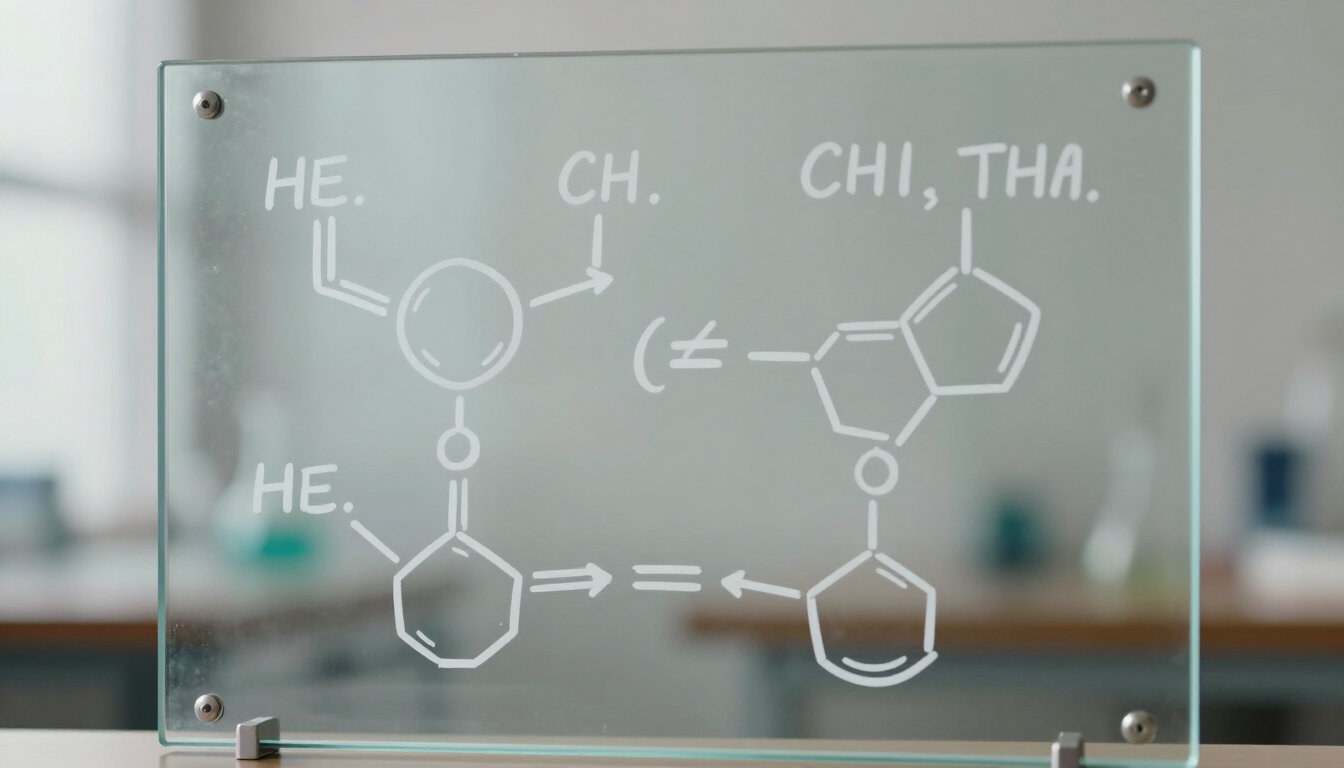
Scientific Conceptual Diagram

How does cognitive science improve HSC results?

Our tutoring methodology is not just based on chemical expertise, but on the principles of cognitive science that dictate how humans actually learn and retain information. We utilize three core strategies to ensure long-term retention and exam readiness:

  • Spacing: Instead of focusing on one module for weeks and then moving on, we revisit concepts periodically. This overcomes the "forgetting curve," ensuring that Module 5 concepts are still fresh when the student is halfway through Module 8.
  • Interleaving: We mix different types of problems in a single session. This forces the brain to distinguish between similar but distinct concepts (like differentiating between galvanic and electrolytic cells), which is exactly what students must do during the final HSC exam.
  • Retrieval Practice: We prioritize active recall over passive reading. Our sessions involve frequent low-stakes testing, forcing students to pull information from their long-term memory, which strengthens the neural pathways associated with that knowledge.

This PhD-led approach is particularly effective for students in Camperdown and online across Australia who are aiming for top-tier university placements. By understanding the "why" behind the pedagogy, parents can feel confident that their investment in tutoring pricing and packages is backed by scientific rigor. We don't just provide answers; we provide the cognitive architecture for excellence. Our students learn to see the world through the lens of a scientist, which is why so many of our graduates report that their first year of university chemistry feels like a review rather than a hurdle.

The Tutorio Difference: PhD-Led Academic Support

What sets Tutorio apart from standard tutoring services is the level of expertise and the "Third Space" approach. Located in a professional café studio in Camperdown after 5pm, or online via high-end document cameras and graphics tablets, we provide a sophisticated environment for learning. This isn't just about homework help; it is about high-level academic mentorship. Whether preparing for Primary School Tutoring OC exams or the rigors of the IB and HSC, our students benefit from a candidacy-led perspective that understands the end-to-end journey of education.

Our use of the Viisan VK-16 document camera allows for real-time annotation of student work, mimicking the feedback loop found in elite research environments. This transparency into pedagogy ensures that both students and parents understand the progress being made. You can read more about how this has impacted our community in our testimonials section.

Sydney Tutoring Studio

Summary: The Evidence-Based Path to Success

Mastering high school chemistry requires more than just hard work; it requires a scientific approach to learning itself. By utilizing Johnstone's Triangle to decode the complexity of chemical concepts and the CORE™ Framework to structure problem-solving, Tutorio provides a pathway to Band 6 results that traditional methods simply cannot match. Our integration of cognitive science principles like spacing and retrieval practice ensures that students are not just exam-ready, but have built a foundation for lifelong scientific literacy.

Key Takeaways for Parents and Students:

  • Move Beyond Symbols: Chemistry mastery requires connecting equations (Symbolic) to real-world observations (Macroscopic) and molecular actions (Sub-microscopic).
  • Structured Problem Solving: Use the CORE™ Framework (Clarify, Organize, Resolve, Evaluate) to tackle difficult, multi-step HSC questions.
  • Avoid the Forgetting Curve: Leverage spacing and retrieval practice rather than last-minute cramming to ensure long-term retention.
  • Seek Specialist Guidance: PhD-led instruction provides the depth of knowledge necessary to bridge the gap between high school and university standards.

If you are ready to transform your child's approach to Science or Mathematics, we invite you to contact us today to discuss how our PhD-led sessions in Camperdown or online can drive measurable academic improvement.

Recent Posts

April 21, 2026
Summary of Neurodivergent Science Success
HSC Chemistry Module 5 Misconceptions infographic style image
April 21, 2026
Identify and fix the 5 most common HSC Chemistry Module 5 misconceptions. Learn how Tutorio's PhD-led approach uses Johnstone's Triangle for student success.
Specialized chemistry support for neurodivergent students using diagnostic reasoning.
April 21, 2026
Expert guide for families of neurodivergent students (ASD, ADHD) struggling with Chemistry. Learn how specialized diagnostic tutoring and scaffolding help learners succeed in secondary science.
Comparison of IB and HSC/VCE curriculum pathways for elite students.
By Dr Andrew Wotherspoon April 9, 2026
A PhD-led expert guide comparing the IB Diploma with HSC and VCE pathways. Analyze ATAR scaling, workload demands, and curriculum depth to choose the right senior secondary route for elite university entry.
Primary school student focused on academic learning and cognitive development.
April 5, 2026
Discover why building cognitive architecture in Years 1-6 is essential for high-performance HSC, IB, and Selective School results. Move beyond the catch-up mentality.
PhD-led science tutoring session illustrating cognitive architecture in learning.
April 5, 2026
Discover how PhD-led science tutoring in Sydney uses cognitive architecture to move beyond information transfer and secure elite HSC and IB results.
Sophisticated fountain pen writing on parchment representing elite English essay strategy
April 2, 2026
Discover why B+ students fail to reach Band 6 in HSC/VCE English and how a PhD-led synthesis approach breaks the generic essay ceiling for elite ATAR results.
A tutor in a light blue shirt works with a student, writing in a notebook near a laptop and tablet at a white desk.
By Dr Andrew Wotherspoon, Founder Tutorio Tutoring March 30, 2026
Learn why cognitive habits established in Years 1-6 are the foundation for elite results in OC, Selective schools, and the HSC. Discover Tutorio's PhD-led proactive architecture approach for primary students.
Two people sit at a table, looking at open documents and writing with pens in a bright, modern office space with shelves.
By Dr Andrew Wotherspoon March 30, 2026
Expert guide for parents on finding the best HSC or VCE tutor in Australia. Dr. Andrew Wotherspoon (MSc Distinction) explains how to match tutoring to your child’s specific learning needs and ATAR goals.
High-fidelity online STEM tutoring workstation with graphics tablet and document camera.
By Dr Andrew Wotherspoon, Founder of Tutorio Tutoring March 29, 2026
A scholar-practitioner guide to online STEM tutoring using Kamvas 12 tablets, Lessonspace, and cognitive science to drive elite results for HSC, VCE, and IB students.
Show More